

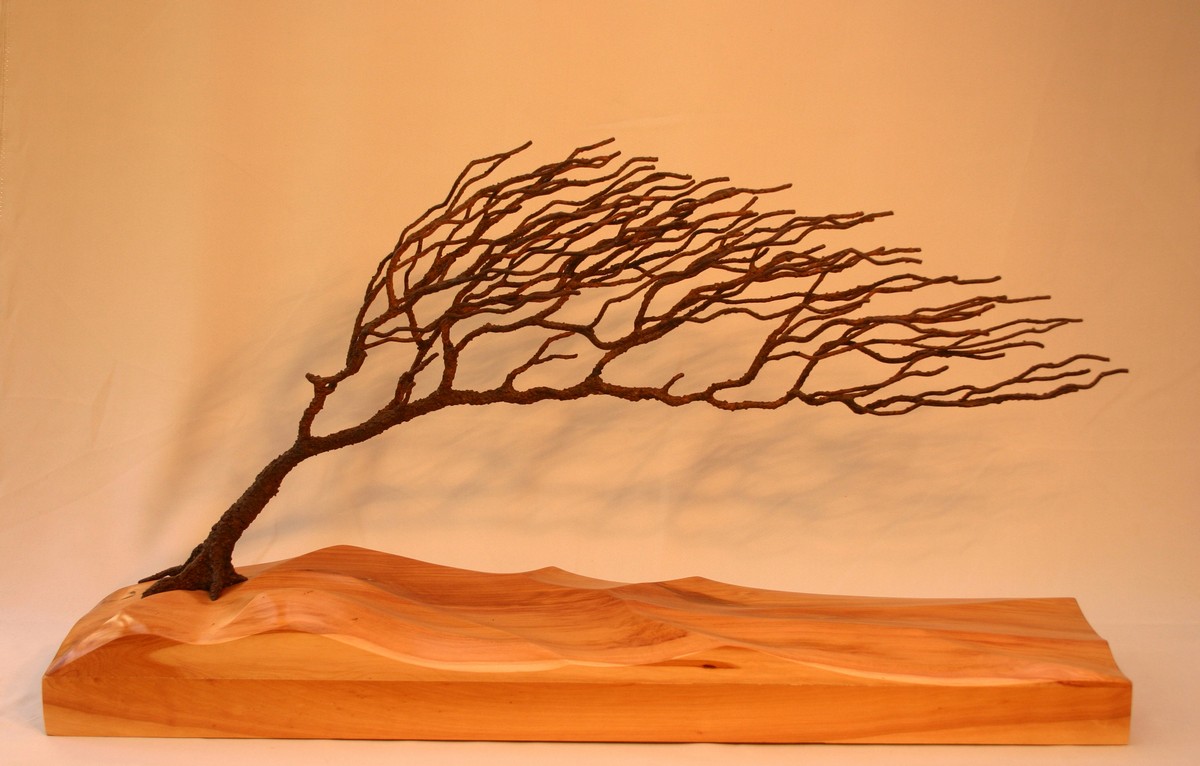
“Los árboles me han dado siempre los sermones más profundos. Los respeto cuando viven en poblaciones o en familias, en bosques o en arboledas. Pero aún los respeto más cuando viven apartados. Son como individuos solitarios. No como ermitaños que se hubieran recluido a causa de una debilidad, sino como seres grandes y aislados, como Beethoven o Nietzsche.
En sus ramas más altas susurra el mundo y sus raíces descansan en lo infinito; pero no se abandonan ahí, luchan con toda su fuerza vital por una única cosa: cumplir con ellos mismos según sus propias leyes, desarrollando su propia forma, representándose a sí mismos. Nada es más sagrado, nada es más ejemplar que un árbol fuerte y hermoso.
Cuando se tala un árbol y se muestra desnuda al sol su herida mortal, puede leerse toda su historia en el tosco y lapidario disco de su tronco: en sus anillos anuales y en sus cicatrices están descritos con exactitud toda lucha, todo sufrimiento, toda enfermedad, toda fortuna, toda recompensa. Años flacos y años abundantes, agresiones soportadas y tormentas sobrevividas. Y cualquier hijo de campesino sabe que la madera más dura y noble es la que tiene los anillos más estrechos, y que arriba en la montaña, en constante peligro, crecen las ramas más inquebrantables, las más fuertes y ejemplares.
... El árbol dice: mi fuerza es la confianza. No sé nada de mis padres y no sé nada de los miles de hijos que cada año nacen de mí. Vivo hasta el final el secreto de mi semilla y de nada más me ocupo. Confío que Dios está en mí. Confío que mi misión es sagrada. Y de esta confianza vivo...
Hermann Hesse. Trees (Árboles), del libro Wandering.
“Trees have always given me the deepest sermons. I respect them when they live in communities or families, in forests or groves. But I respect them even more when they stand apart. They are like solitary individuals. Not like hermits withdrawn because of weakness, but like great and isolated beings, like Beethoven or Nietzsche.
In their highest branches the world whispers, and their roots rest in the infinite; yet they do not lose themselves there. With all their vital force they struggle for one thing alone: to fulfill themselves according to their own laws, developing their own form, representing themselves. Nothing is more sacred, nothing more exemplary, than a strong and beautiful tree.
When a tree is cut down and its mortal wound is laid bare to the sun, its whole history can be read in the rough, lapidary disk of its trunk: in its annual rings and scars are written every struggle, every suffering, every illness, every fortune, every reward. Lean years and abundant years, assaults endured and storms survived. And any farmer's child knows that the hardest and noblest wood is the wood with the narrowest rings, and that high in the mountains, in constant danger, grow the most unbreakable branches, the strongest and most exemplary.
... The tree says: my strength is trust. I know nothing of my parents, and I know nothing of the thousands of children born from me each year. I live to the end the secret of my seed, and I concern myself with nothing else. I trust that God is within me. I trust that my mission is sacred. And from this trust I live...
Hermann Hesse. Trees, from Wandering.
Antonio Machado

Caminante, son tus huellas el camino, y nada más; caminante, no hay camino: se hace camino al andar. Al andar se hace camino, y al volver la vista atrás se ve la senda que nunca se ha de volver a pisar. Caminante, no hay camino, sino estelas en la mar.
Antonio Machado. Proverbios y cantares, en Campos de Castilla.
Traveler, your footprints are the path, and nothing more; traveler, there is no path: the path is made by walking. By walking the path is made, and when looking back one sees the trail that never will be walked again. Traveler, there is no path, only wakes upon the sea.
Antonio Machado. Proverbs and Songs, from Campos de Castilla.